Tides of Change: How the Farming Calendar Shapes Every Harris Creek Oyster You Eat
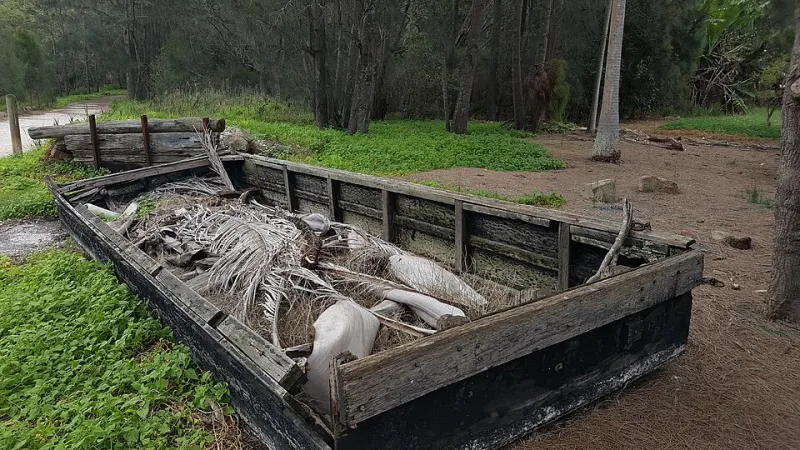
Photo: TrimmerinWiki, CC BY-SA 4.0, via Wikimedia Commons
There is a particular kind of knowledge that belongs exclusively to those who work on the water. It lives in the hands that read current and temperature, in the eyes that scan sky and surface for signals invisible to the uninitiated. At Harris Creek, a tributary of Maryland's Chesapeake Bay that has long been celebrated for its oyster-producing waters, the farmers who tend these bivalves operate according to a rhythm far older than any modern aquaculture practice. Their year is not divided into conventional quarters — it is shaped by spawning cycles, water temperature gradients, salinity shifts, and the patient accumulation of time that ultimately determines what arrives on your plate.
For the discerning diner or home cook seeking the finest eating experience, understanding this seasonal arc is not merely academic. It is the difference between a transcendent oyster and a merely adequate one.
Winter: The Season of Peak Flavor
If there is a golden period for the Harris Creek oyster enthusiast, it arrives with the cold. As water temperatures drop below fifty degrees Fahrenheit — typically from late November through February — the oysters enter a state of reduced metabolic activity. They cease feeding as aggressively, their bodies drawing down stored glycogen reserves. The biological consequence of this process is remarkable: the flesh becomes dense, creamy, and suffused with a natural sweetness that warmer-season oysters rarely achieve.
For farmers, winter presents its own formidable demands. Working in pre-dawn darkness on frigid water, cages must still be turned and inspected, fouling organisms managed, and harvest operations executed with particular care. Ice formation in the shallows can displace equipment and stress the animals, requiring vigilance and rapid response. Yet the reward for this labor — and for the patient diner who seeks out winter stock — is an oyster at the apex of its culinary potential.
The briny, clean finish that Harris Creek oysters are known for becomes most pronounced during these months. The merroir, that liquid sense of place that aficionados prize, arrives with uncommon clarity. This is when a raw bar presentation needs little adornment beyond a squeeze of lemon or a spare mignonette.
Spring: Transition, Spawn, and the Art of Restraint
As water temperatures climb through March and into April, Harris Creek enters one of its most critical and complex periods. The oysters begin preparing for spawning — a reproductive cycle that fundamentally alters both their physiology and their palatability. Farmers must exercise considerable judgment during this window, accelerating harvest of mature stock before the spawn cycle renders them soft, watery, and less desirable for raw consumption.
The old culinary adage about avoiding oysters in months without the letter "R" finds its biological basis precisely here. Spawning oysters expend enormous energy, depleting the glycogen reserves that give winter and fall oysters their characteristic richness. The flesh becomes thinner and milky in texture — not unsafe, but a markedly different eating experience than peak-season stock.
For farmers, spring is equally a time of renewal. Seed oysters — tiny juveniles, often no larger than a grain of rice — are introduced to nursery systems. The careful management of this seed stock through spring and into summer determines the harvest quality of future seasons. It is work that demands precision: monitoring growth rates, adjusting cage densities, and protecting young animals from the predatory pressures that warm water brings.
Summer: Growth, Vigilance, and the Long Investment
Summer on Harris Creek is a season of abundance and anxiety in equal measure. Warm water accelerates growth dramatically — oysters that spent months barely perceptible to the eye can reach harvestable size with striking speed. Farmers spend long days on the water, managing the biological productivity of the bay while contending with its hazards.
Oxygen depletion events, known as hypoxic conditions, can threaten entire cage populations if not monitored carefully. Harmful algal blooms, while historically managed through rigorous state and federal oversight, require constant attention. Water quality testing, a cornerstone of responsible Harris Creek aquaculture, intensifies during these months to ensure that every oyster reaching market meets the highest standards of food safety.
For the consumer, summer oysters present an interesting proposition. While not at their flavor peak, properly managed Harris Creek stock can still offer a pleasant, lighter eating experience — brighter and more saline, with less of the buttery weight that defines winter specimens. They pair well with crisp, effervescent beverages and suit preparations that complement rather than overwhelm their more delicate character.
Autumn: The Reward of Patience
Many oyster farmers and culinary professionals consider fall — September through November — the second great season, rivaling winter for the quality of the harvest it produces. As water temperatures begin their descent and spawning cycles conclude, the oysters redirect their biological energy toward rebuilding glycogen stores. The flesh firms, fattens, and recovers its depth of flavor with remarkable efficiency.
For Harris Creek farmers, autumn represents the culmination of a year's labor. Oysters planted as seed in spring have grown through summer into market-ready animals. Harvest operations scale upward, supplying restaurants, retailers, and direct consumers across the country with oysters at or near peak condition. The creek itself, settling into the quieter rhythms of the cooling season, offers more predictable working conditions than the volatile summer months.
This is also when the nuanced flavor complexity of Harris Creek's particular growing environment becomes most legible. The interplay of fresh water inputs from surrounding tributaries and the saltier influence of the broader Chesapeake creates a profile that veteran tasters describe as balanced — neither aggressively briny nor flat, with a mineral finish that lingers pleasantly.
Timing Your Purchase: A Practical Framework
Armed with an understanding of the farmer's year, the thoughtful consumer can approach oyster purchasing with considerably more intention. For raw consumption and peak flavor, the window from October through February represents the most reliably excellent eating. Winter, in particular, offers the richest, creamiest specimens Harris Creek produces.
For cooked preparations — roasted, broiled, or incorporated into chowders and stuffings — summer and early spring stock remains entirely appropriate. The heat of cooking transforms texture and amplifies the savory qualities of the oyster's liquor, making seasonal variation less determinative of the final result.
When sourcing Harris Creek oysters, inquire about harvest dates whenever possible. A reputable supplier will know precisely when their stock left the water. Freshness, measured in days rather than weeks, remains the single most important variable in oyster quality regardless of season.
A Living Product of a Living Place
What distinguishes a Harris Creek oyster from a commodity product is precisely this inseparability from its environment and its time. Each shell carries within it the specific conditions of its growing season: the temperature of the water, the plankton community that sustained it, the particular salinity signature of the creek on the days it fed most actively. The farmer's year is not a production schedule — it is a continuous negotiation with a living system.
To eat a Harris Creek oyster with awareness of this context is to taste not merely a seafood product but a moment in a particular place's seasonal life. That understanding, we believe, is what elevates a good meal into something genuinely memorable.