Shells as Scaffolding: The Science and Soul of Rebuilding Harris Creek's Oyster Reefs
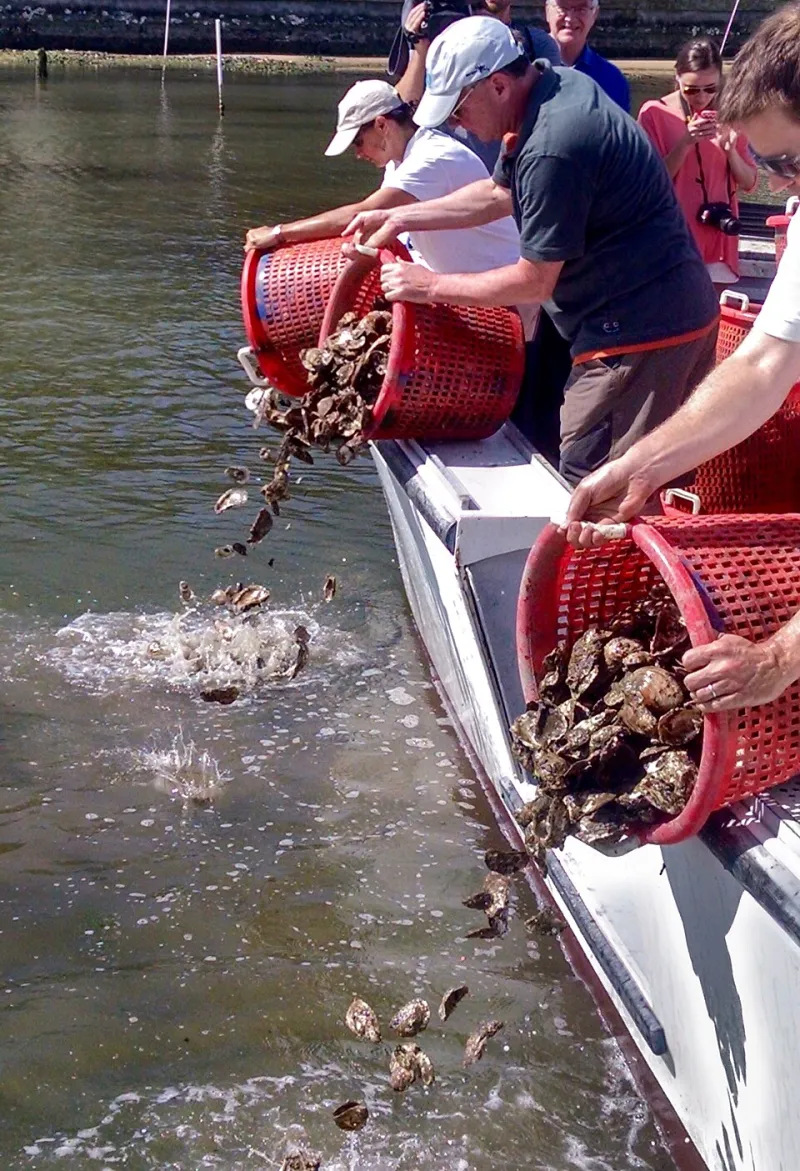
Photo: Senator Tim Kaine, Public domain, via Wikimedia Commons
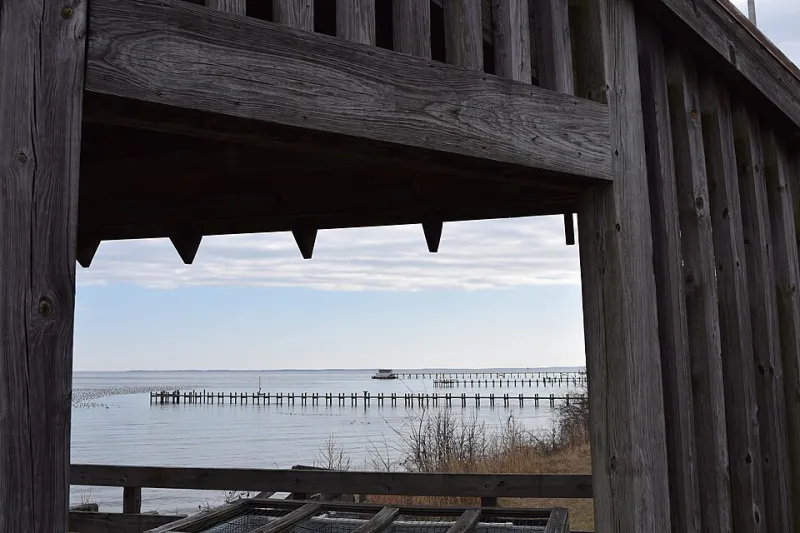
There is a moment, standing at the edge of the Chesapeake Bay on a still morning, when the water reveals almost nothing of what lies beneath. Yet below that calm surface, an intricate ecosystem is reasserting itself—one oyster at a time. Harris Creek, a tributary of the Choptank River on Maryland's Eastern Shore, has become one of the most closely watched chapters in American marine conservation. What was once a dramatically depleted waterway is now a functioning oyster sanctuary, and the story of its recovery carries implications that extend well beyond ecology.
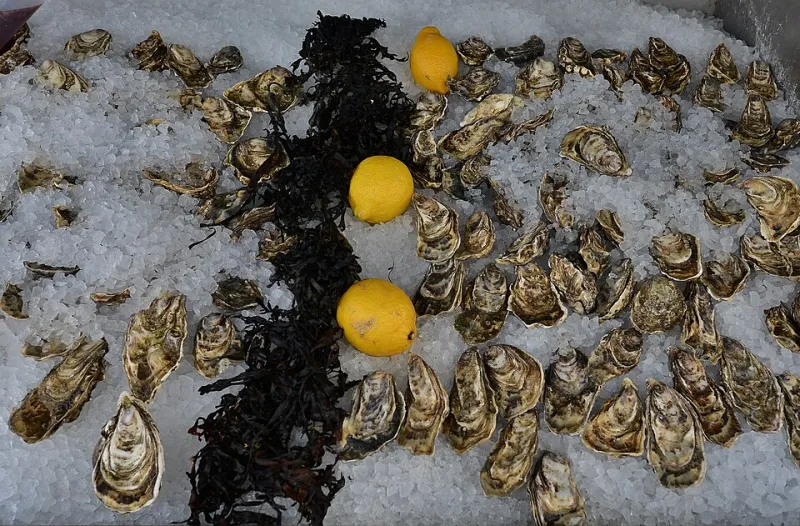
For those who appreciate Harris Creek oysters at the table, understanding what has transpired beneath those waters lends each shell an added dimension of meaning.
A System Pushed to Its Limits
Oyster populations in the Chesapeake Bay declined by more than 99 percent over the course of the twentieth century. Overharvesting, disease, sedimentation, and degraded water quality each played a role in dismantling reefs that had taken centuries to form. Harris Creek was no exception. By the early 2000s, the once-productive beds had been reduced to fragments—scattered remnants of a biological infrastructure that had filtered billions of gallons of water and supported entire food webs.
The collapse was not merely an environmental inconvenience. It was the unraveling of a keystone species from a system that depended on it. Oysters filter up to fifty gallons of water per day, removing excess nitrogen, phosphorus, and suspended sediments. When they disappear, water clarity declines, submerged grasses retreat, and the habitat supporting fish, crabs, and waterfowl degrades accordingly.
Restoration as Architecture
The restoration effort at Harris Creek began in earnest around 2012, under a collaborative framework involving the National Oceanic and Atmospheric Administration (NOAA), the Army Corps of Engineers, the Chesapeake Bay Foundation, and the Maryland Department of Natural Resources, among other partners. The project designated Harris Creek as a no-harvest sanctuary—a designation that allowed restoration work to proceed without the pressure of commercial extraction.
The methodology was, in essence, architectural. Restoration teams deposited millions of bushels of recycled oyster shell onto the creek bottom, creating the hard substrate that juvenile oysters—known as spat—require to attach and grow. This substrate, called cultch, functions as scaffolding for reef development. Without it, oyster larvae drift through the water column and perish, unable to find a suitable surface.
Once the cultch was in place, hatchery-raised spat were introduced at scale. Marine biologists monitored settlement rates, survival, and reef height with a precision that would not look out of place in a clinical research setting. Early results were encouraging. Within several years, reef heights had increased substantially, and oyster densities in restored areas far exceeded those in adjacent unrestored zones.
What the Data Reveals
The ecological dividends of the Harris Creek restoration have been measurable and, in some respects, remarkable. Independent monitoring has documented significant improvements in water clarity within the sanctuary. Submerged aquatic vegetation—critical nursery habitat for juvenile blue crabs and fish—has returned to areas where it had been absent for decades. Fish species diversity within the restored reef zones has increased, and bird surveys have noted greater activity from species that rely on shallow-water foraging grounds.
Perhaps most significantly, the oyster population itself has demonstrated resilience that surprised even cautious optimists. The reefs have begun to exhibit self-sustaining reproduction, meaning that wild recruitment is supplementing the hatchery-seeded populations. This transition from managed restoration to natural regeneration represents the benchmark that conservation scientists aim for—a system capable of perpetuating itself.
The Role of Sustainable Aquaculture
While the Harris Creek sanctuary remains closed to harvest, the restoration's success has reverberated through the broader oyster farming community in the region. Cleaner water, healthier bay ecosystems, and improved public awareness of oyster ecology have created conditions in which sustainably managed oyster aquaculture can flourish.
Oyster farming, when practiced responsibly, is widely regarded by marine scientists as one of the most environmentally beneficial forms of food production available. Farmed oysters require no feed inputs, no freshwater irrigation, and no terrestrial land use. They actively improve the water quality in which they grow. Each oyster harvested from a well-managed farm represents a net positive for the surrounding marine environment.
At Harris Creek Oyster, the oysters we source are cultivated by growers who operate with an acute awareness of this ecological context. The lessons of the sanctuary—the importance of substrate, water quality, and biological carrying capacity—inform the practices of responsible aquaculture operations throughout the Chesapeake watershed.
How Consumers Participate in Conservation
The relationship between the dinner table and the restoration site is more direct than it might appear. Consumer demand for sustainably sourced oysters drives investment in responsible aquaculture, which in turn supports the economic viability of coastal communities that have a vested interest in maintaining healthy waterways.
Several practical steps allow oyster enthusiasts to align their purchasing decisions with conservation values. Seeking out oysters from certified sustainable farms—those operating under state or third-party environmental oversight—ensures that your consumption supports responsible practices. Participating in shell recycling programs, which collect spent oyster shells from restaurants and return them to the bay as cultch, closes the loop between table and reef in a tangible way. Organizations such as the Chesapeake Bay Foundation and the Maryland Department of Natural Resources operate shell recycling initiatives that accept contributions from individuals and establishments alike.
Asking questions at the point of purchase is equally valuable. Where were these oysters grown? Under what conditions? Reputable purveyors, including those who source Harris Creek oysters, welcome such inquiries and can speak to the provenance and farming practices behind each product.
A Living Pantry, Carefully Tended
There is an old adage among Chesapeake watermen that the bay is not merely a body of water—it is a pantry. That framing carries with it an implicit responsibility: pantries require tending. The restoration of Harris Creek represents a generation's commitment to that stewardship, undertaken with scientific rigor and a long view of what the estuary can and should be.
When you open a Harris Creek oyster, you are engaging with a product shaped by geography, water chemistry, and time—but also by deliberate human effort to ensure that such flavors remain available. The briny, mineral-forward character of a well-grown Chesapeake oyster is inseparable from the health of the ecosystem that produced it. Supporting that ecosystem, whether through conscious purchasing, shell recycling, or simply understanding the science behind restoration, is an act of participation in something larger than any single meal.
The reef is being rebuilt, one shell at a time. The table, it turns out, is part of that work.