Tasting the Chesapeake: What Makes Harris Creek Oysters a Study in Liquid Geography
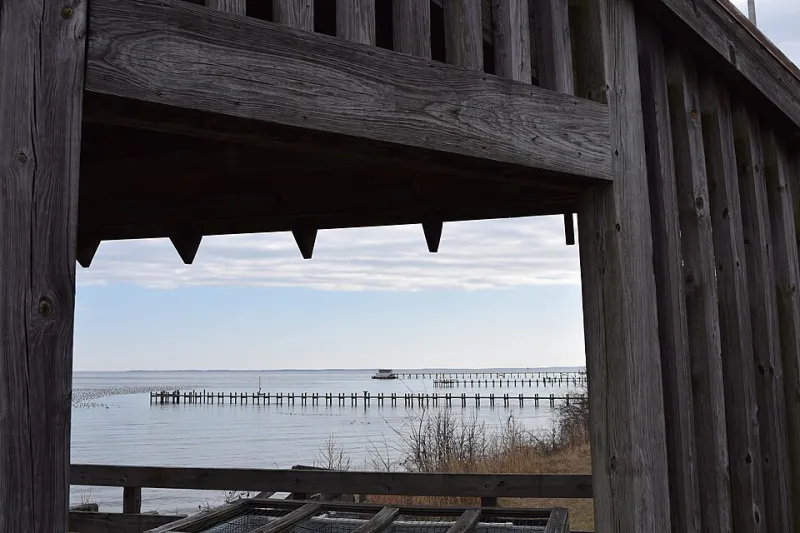
Photo: JefferyGoldman, CC BY-SA 4.0, via Wikimedia Commons
When a sommelier describes a Chablis as tasting of chalk and sea spray, they are invoking terroir — the French concept that a place's soil, climate, and topography leave an indelible imprint on what grows within it. For decades, that language belonged exclusively to wine. But spend an afternoon on the water with an oyster farmer working Harris Creek, a tributary nestled along the eastern shore of Maryland's Chesapeake Bay, and you will quickly understand that the same principle applies — with equal elegance — beneath the surface.
The term the oyster world has adopted is merroir, a portmanteau of mer (the French word for sea) and terroir. It describes the way that water temperature, salinity gradients, mineral content, tidal flow, and the microscopic organisms drifting through a given estuary collectively shape the taste of an oyster grown there. At Harris Creek, every one of those variables converges in a way that is, to borrow a phrase from the wine world, genuinely singular.
The Science Beneath the Surface
Dr. Lydia Morse, a marine ecologist who has studied Chesapeake Bay water quality for over fifteen years, describes Harris Creek as an estuary of remarkable complexity. "What you have here is a mixing zone," she explains. "Fresh water moving down from inland tributaries meets the saltier water pushing in from the lower Bay. That gradient is not static — it shifts with rainfall, with the season, with the tides. And the oysters are recording all of it."
Salinity is perhaps the single most influential variable in merroir. Harris Creek oysters typically develop in water registering between 12 and 18 parts per thousand — a moderate salinity range that sits comfortably between the briny intensity of a Pacific Coast Kumamoto and the milder, almost sweet profile of a Gulf oyster. That middle range produces what veteran tasters often describe as a balanced brine: present enough to announce itself, restrained enough to allow secondary flavors to emerge.
Those secondary flavors are where Harris Creek becomes genuinely interesting. The creek's watershed is rich in phytoplankton, particularly diatoms, which form the primary diet of filter-feeding oysters. "Diatoms impart a clean, almost mineral-green quality," says James Whitfield, a third-generation oyster farmer who has worked Harris Creek for over two decades. "When people say our oysters taste like the ocean on a clear day, that's what they're tasting — the phytoplankton, the minerals, the health of the water itself."
Seasonal Variations and the Oyster's Internal Calendar
One of the most compelling aspects of Harris Creek merroir is its seasonality. Unlike a manufactured food product, an oyster is a living archive of its environment, and that environment changes dramatically across the calendar year.
Spring oysters, harvested as water temperatures rise and phytoplankton blooms intensify, tend to be plumper and more vegetal in character — some tasters note a faint cucumber or sea lettuce quality that softens the brine. Summer brings warmer waters and accelerated growth, yielding oysters with a creamier texture and a slightly more pronounced sweetness as glycogen levels climb. Autumn is widely regarded as the peak season among connoisseurs: cooler temperatures firm the meat, concentrate the minerals, and produce what Whitfield calls "the full Harris Creek signature — that long, clean finish with a whisper of copper."
Winter oysters, harvested before spawning season disrupts the meat's texture, offer perhaps the most complex profile of all. Reduced phytoplankton availability slows growth and deepens flavor concentration, producing a denser, more intensely briny oyster that pairs exceptionally well with a dry fino Sherry or a crisp, unoaked Chardonnay.
Comparing the Field: Harris Creek Against the Nation's Great Growing Regions
To appreciate what Harris Creek offers, it helps to situate it within the broader American oyster landscape. The United States produces oysters of remarkable diversity, from the plump, cucumber-forward Kumamotos of Washington State to the aggressively saline Wellfleets of Cape Cod to the mild, buttery varieties cultivated in Louisiana's Gulf waters.
Placed side by side with a Wellfleet, a Harris Creek oyster reveals a notably softer brine and a more mineral-forward mid-palate. Where the Wellfleet announces itself with an almost assertive saltiness, Harris Creek lingers — its character unfolding gradually, like a well-structured wine that opens up over the course of a meal. Against a Gulf oyster, the contrast is even sharper: Gulf varieties, grown in lower-salinity waters, tend toward sweetness and a creamy, almost milky finish. Harris Creek, by comparison, is more structured, more complex, and considerably more site-specific.
This is precisely the quality that has earned Chesapeake oysters — and Harris Creek oysters in particular — a dedicated following among American chefs and culinary enthusiasts. "They're not trying to be the biggest or the saltiest or the most dramatic," says one East Coast chef who sources Harris Creek oysters for a tasting menu. "They're trying to be exactly themselves. And that takes remarkable water."
How to Taste for Merroir: A Practical Guide
For those new to the practice of tasting oysters analytically, the following framework offers a structured entry point.
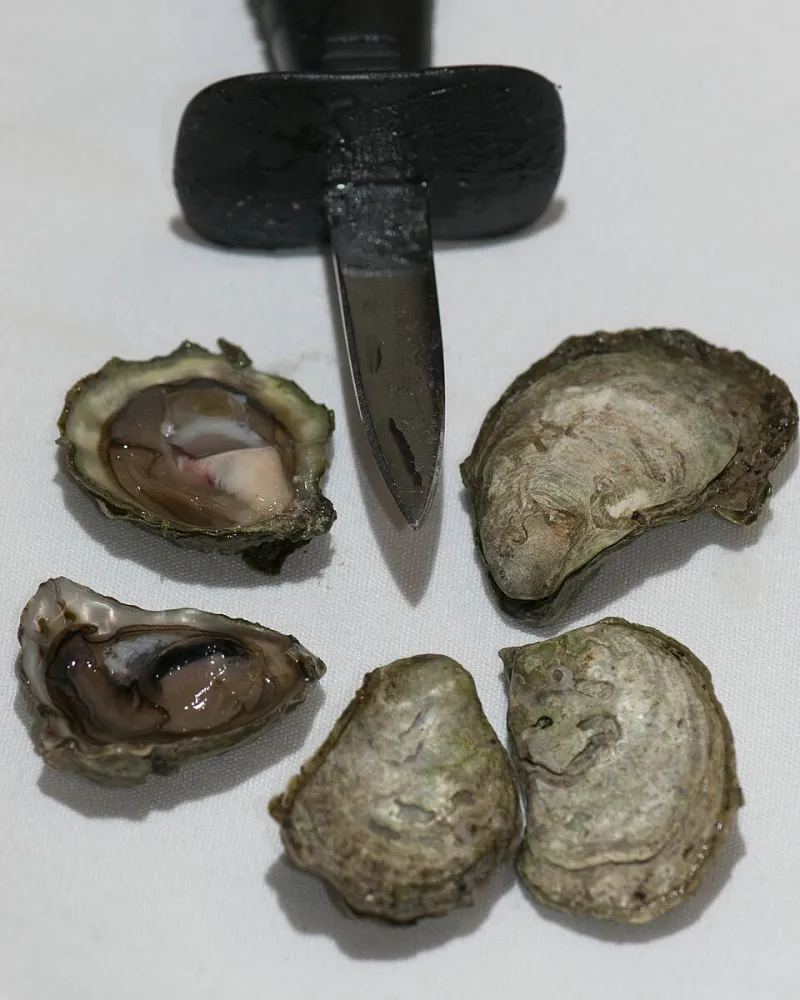
Begin with appearance. A freshly shucked Harris Creek oyster should present a plump, ivory-to-cream colored mantle surrounded by a clear, slightly greenish liquor. Cloudiness in the liquor or a shrunken mantle are signs of age — neither contributes to an honest merroir assessment.
Smell before you taste. Bring the shell close and inhale. You should detect clean ocean air, perhaps a faint note of wet stone or fresh seaweed. Any sulfurous or ammonia-like odor indicates spoilage and the oyster should be set aside.
Sip the liquor first. Before consuming the oyster itself, tilt the shell and drink the natural liquid it contains. This is the purest expression of merroir — unmediated by the oyster's own fat and glycogen. Notice the salinity, the mineral quality, any herbal or vegetal undertones.
Chew deliberately. Many first-time oyster eaters swallow immediately, sacrificing the most informative part of the experience. Chew three or four times and allow the flavor to develop across the palate. With a Harris Creek oyster, you should notice the brine arriving first, followed by a mineral, slightly metallic mid-note, and then a clean, oceanic finish.
Consider the finish. How long does the flavor linger? Does it evolve or fade quickly? Harris Creek oysters are prized, in part, for their length of finish — a characteristic that Dr. Morse attributes to the creek's particular mineral composition, including elevated levels of zinc and magnesium relative to more southerly Chesapeake growing sites.
A Place Worth Knowing
There is something quietly remarkable about the idea that a body of water — its temperature, its chemistry, its microscopic inhabitants — can produce a flavor so specific that experts can identify it blind. Harris Creek is not simply a growing location. It is, in the truest sense, an ingredient.
For those who approach the table with curiosity, the oyster becomes a portal: a way of tasting a place, a season, a tide. Harris Creek oysters invite that kind of attention. They reward it generously.