How Harris Creek Oysters Are Teaching a New Generation to Love the Sea

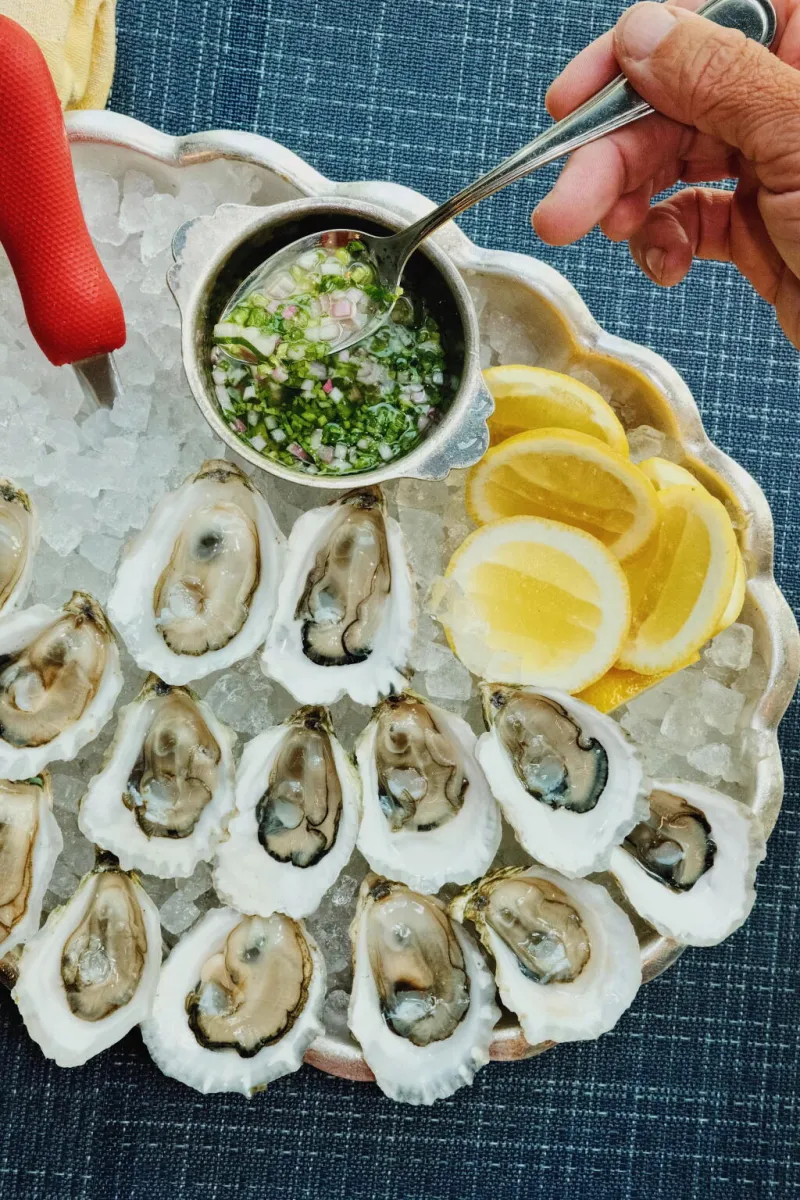
Photo: oyster tasting experience restaurant sommelier education seafood, via themaineoystercompany.com
There is a particular moment that seafood educators describe with almost uniform consistency: the instant when a first-time oyster taster transitions from hesitation to revelation. The shell is tilted, the liquor meets the palate, and something shifts. It is not merely a new flavor being registered — it is a new framework for understanding food itself. For a growing number of chefs, sommeliers, and culinary instructors across the United States, Harris Creek oysters have become the instrument through which that transformation most reliably occurs.
The Rise of the Oyster Educator
The role of the oyster sommelier — a professional dedicated specifically to guiding diners through the nuances of bivalve appreciation — has evolved considerably over the past decade. Once confined to the most rarefied corners of fine dining, these specialists are now found in oyster bars, coastal restaurants, and even at private events in cities far removed from the nearest tidal estuary.
Chef Mariana Delacroix, who leads culinary programming at a Chesapeake-focused restaurant in Annapolis, Maryland, describes the shift plainly. "Ten years ago, my job was to reassure nervous diners that oysters were safe to eat," she says. "Today, those same diners are asking me about salinity levels, about harvest timing, about the difference between a spring oyster and one pulled in late autumn. The curiosity has deepened enormously."
Delacroix credits much of that deepened curiosity to the increasing visibility of origin-specific oysters — and Harris Creek, she notes, occupies a particularly instructive position in that landscape. "When I want to introduce someone to what a truly expressive Chesapeake oyster tastes like, Harris Creek is almost always where I begin. The flavor profile is distinctive but not aggressive. There is complexity without intimidation."
What Makes Harris Creek an Ideal Starting Point
The waters of Harris Creek, a tributary of the Choptank River on Maryland's Eastern Shore, produce oysters shaped by a very specific confluence of environmental conditions. The salinity is moderate — neither the sharp brine of a cold Atlantic coast oyster nor the mellow sweetness of a Gulf variety — and the mineral character carries a clean, almost mineral-tinged finish that lingers without overwhelming. For educators working with novice tasters, this balance is pedagogically valuable.
James Whitfield, a seafood educator who conducts oyster tasting workshops in Washington, D.C., and Philadelphia, has built a structured curriculum around exactly this quality. "I use Harris Creek oysters as what I call the calibration oyster," he explains. "Before we taste anything else, we spend time with a Harris Creek. We identify the salinity, the sweetness, the finish. Once tasters have that reference point established in their memory, everything else becomes comparative. It gives people a vocabulary they didn't have before."
Whitfield's workshops, which draw participants ranging from culinary students to corporate teams seeking premium dining experiences, consistently report that the Harris Creek portion of the tasting is where engagement peaks. "People stop checking their phones," he says with evident satisfaction. "The shell demands attention in a way that very few foods do."
Building Community Around the Shell
Beyond the restaurant setting, Harris Creek oysters have found a second life as the centerpiece of a broader social ritual — the home oyster tasting. As interest in elevated entertaining has grown among American food enthusiasts, the oyster party has emerged as a sophisticated alternative to the conventional dinner gathering. It is participatory, visually striking, and inherently conversational.
Food writer and home entertaining advocate Suzanne Park, based in Charleston, South Carolina, began hosting oyster tastings at her home after attending a professional shucking demonstration several years ago. "I was completely intimidated by oysters for most of my adult life," she admits. "The turning point was having someone walk me through the experience rather than simply placing a plate in front of me. I wanted to recreate that for my own guests."
Park now sources Harris Creek oysters for her gatherings specifically because of the way they perform in a comparative tasting context. "I typically offer three or four different varieties side by side, and Harris Creek is always the anchor. Its flavor is consistent enough that guests can use it as their benchmark, but interesting enough that it holds its own against more assertive varieties. It never disappears in the comparison."
The communal dimension of the oyster tasting, Park observes, is itself part of its educational power. "When you are shucking together, tasting together, trying to articulate what you are experiencing — it creates a kind of shared language. People who have never thought carefully about food flavor suddenly find themselves discussing salinity and finish and texture. The oyster opens up a conversation that would never have happened over a roast chicken."
The Language of Merroir
Central to any serious oyster education is the concept of merroir — the marine equivalent of terroir, the principle that the specific environment in which an ingredient is produced imparts distinctive characteristics that cannot be replicated elsewhere. For instructors and sommeliers, this concept is both the most intellectually compelling aspect of oyster education and, initially, the most challenging to convey.
"Merroir is abstract until you taste it," acknowledges Chef Delacroix. "You can explain that salinity comes from tidal exchange, that mineral notes reflect the composition of the creek bed, that sweetness relates to phytoplankton density. But none of that becomes real until someone tastes two oysters from different waters side by side and recognizes that they are genuinely, unmistakably different."
This is precisely where Harris Creek oysters serve their most important educational function. Their flavor is expressive enough to make merroir tangible — to transform an abstract concept into a sensory reality that a first-time taster can perceive, articulate, and remember.
From First Shell to Lifelong Appreciation
The ultimate measure of any educational experience is what it produces beyond the moment of instruction. For the chefs, educators, and home entertainers who have made Harris Creek oysters a cornerstone of their culinary programming, the evidence is consistently encouraging.
Whitfield notes that a significant portion of his workshop participants return for more advanced sessions, and many go on to develop genuine expertise in oyster variety and regional distinction. "I have former students who now travel specifically to visit oyster farms," he says. "They have become advocates, evangelists even. And it often traces back to that first Harris Creek tasting where something clicked."
The oyster, for all its ancient history and culinary prestige, remains one of the most accessible entry points into sophisticated food appreciation precisely because it demands so little preparation and delivers so much information. A single shell, properly presented, can communicate geography, ecology, season, and craft in a single swallow.
For those who have yet to experience that moment of revelation, Harris Creek oysters offer a particularly gracious invitation — one extended not from the heights of culinary authority, but from the waters of the Chesapeake itself.