From Ruin to Reverence: The Remarkable Comeback of Harris Creek's Oyster Harvest
Photo: TrimmerinWiki, CC BY-SA 4.0, via Wikimedia Commons
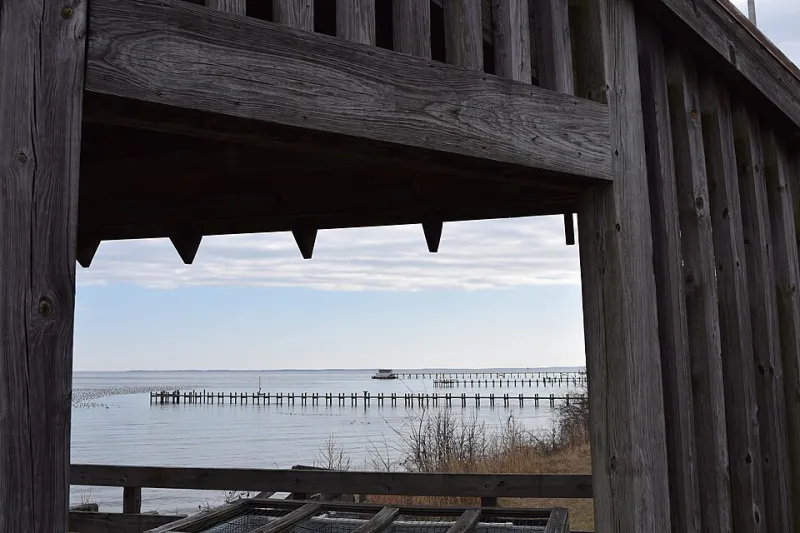
There is a particular kind of pride that watermen carry — quiet, weather-worn, and earned through generations of knowing a body of water the way most people know a city block. Along the eastern shore of Maryland, where Harris Creek feeds into the Choptank River and eventually surrenders itself to the Chesapeake Bay, that pride had grown complicated by the early 2000s. The oyster beds that had sustained families for more than a century were, by most measures, functionally gone. Overharvesting, disease, and deteriorating water quality had reduced the once-abundant Crassostrea virginica population to a fraction of its historical density. What remained was a waterway in mourning.
Today, that same creek is spoken of in entirely different terms — by chefs at white-tablecloth restaurants in New York and Washington, D.C., by marine biologists who use it as a model for restoration science, and by a new generation of watermen who have learned to farm the water rather than simply mine it. Harris Creek has become something rare in American food culture: a place whose name alone communicates quality, provenance, and narrative.
A Watershed Moment in Conservation
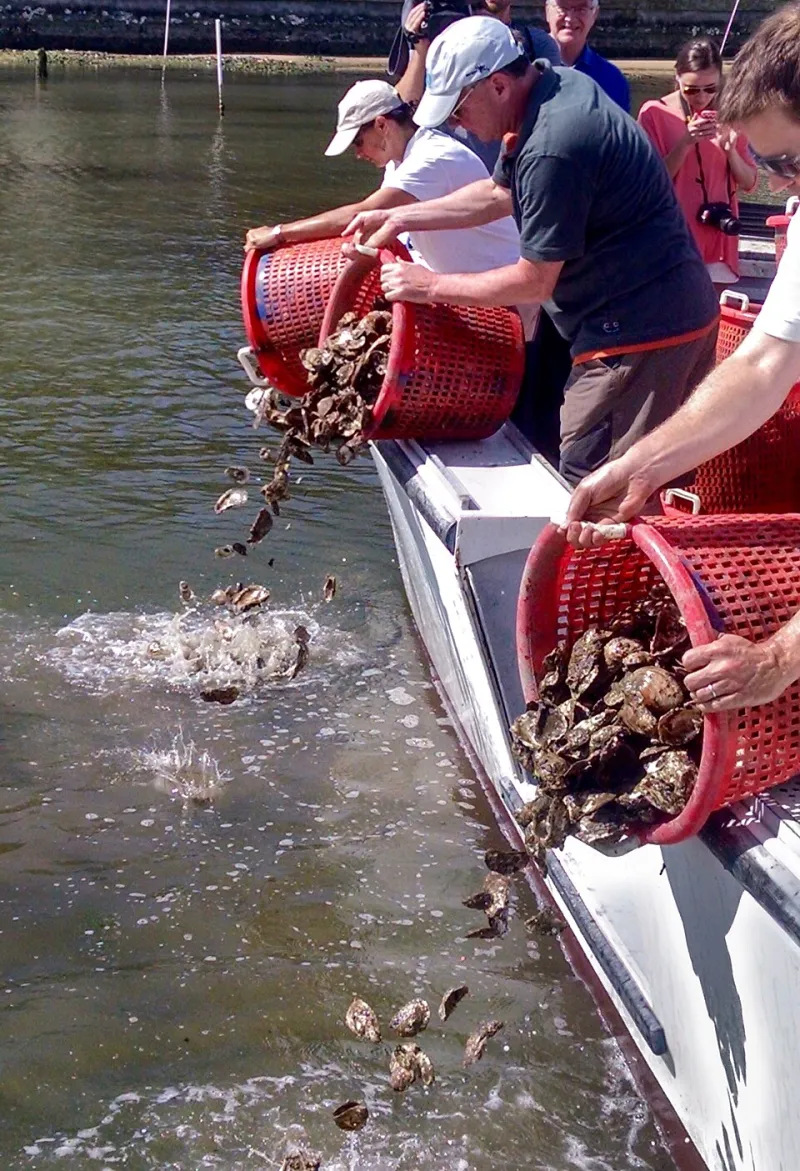
The turning point, most observers agree, arrived not with a single dramatic intervention but through an accumulation of coordinated effort. The Chesapeake Bay Foundation, the Maryland Department of Natural Resources, and the National Oceanic and Atmospheric Administration collectively designated Harris Creek as the site of one of the largest oyster restoration projects ever undertaken on the East Coast. Beginning around 2012 and expanding significantly through 2015, billions of oyster spat — juvenile oysters no larger than a fingernail — were seeded across more than 350 acres of the creek's bottom.
Dr. Stephanie Reynolds, a marine ecologist who has studied the Chesapeake for over two decades, describes the significance of that decision in terms that go well beyond shellfish. "When you restore oysters at that scale, you are not simply returning a species," she explains. "You are rebuilding a filtration system, a nursery habitat, a living architecture that the entire ecosystem depends upon. Harris Creek became a demonstration site for what the Bay could look like if we made different choices."
The results were measurable and, by scientific standards, swift. Water clarity improved. Submerged aquatic vegetation returned to areas that had been murky for years. Crab populations followed. And the oysters themselves — growing in the creek's distinctive mix of brackish water, tidal movement, and nutrient-rich sediment — began to develop the flavor profile that would eventually capture the attention of the culinary world.
The Flavor of a Specific Place
Among oyster connoisseurs, the concept of merroir — a maritime analogue to the wine world's terroir — has gained considerable currency. Just as a Burgundy grape reflects the limestone soils and cool climate of its origin, an oyster expresses the precise chemistry of the water in which it was raised. Harris Creek's particular combination of salinity, temperature fluctuation, and tidal rhythm produces a shellfish that seasoned tasters describe with unusual consistency: a clean, moderately briny opening, a subtle sweetness through the middle, and a long, mineral finish that lingers pleasantly on the palate.
Chef Marcus Holliday, whose mid-Atlantic tasting menu restaurant in Baltimore has featured Harris Creek oysters since 2018, speaks about them with the reverence typically reserved for single-origin ingredients. "When I put a Harris Creek oyster on a plate, I am not just offering protein," he says. "I am offering a specific geography, a specific set of decisions made by farmers who care deeply about their product. Guests who understand that respond to it immediately."
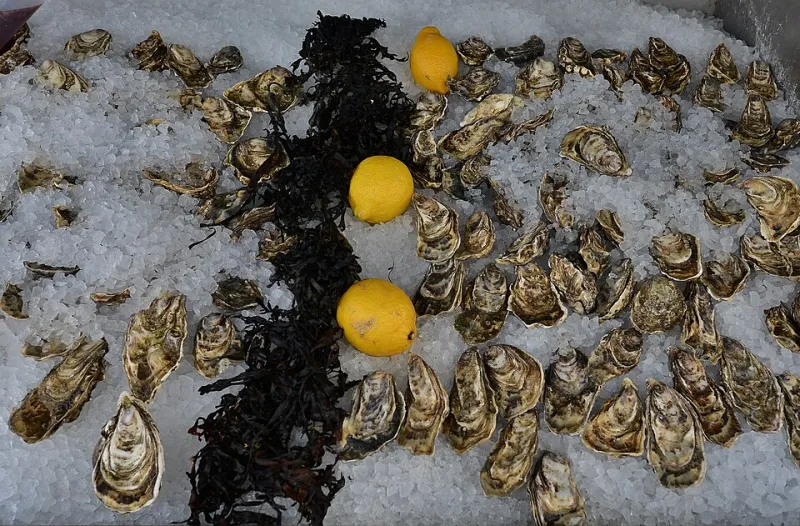
Holliday serves them simply — on the half shell, over hand-chipped ice, with a house-made mignonette built from local apple cider vinegar and shallots from a farm forty miles north. The restraint is deliberate. "These oysters do not need embellishment," he notes. "Anything you add should be in conversation with the oyster, not competing with it."
The Watermen Who Stayed
Behind every celebrated ingredient is a producer who made choices that the market did not always reward in the short term. In Harris Creek's case, those producers are a small but growing community of aquaculture farmers who transitioned from wild harvest — or, in some cases, from entirely different livelihoods — to the more labor-intensive practice of cage-raised oyster cultivation.
Tommy Crane, whose family has worked the Choptank watershed for three generations, made the shift to aquaculture in 2016 after years of diminishing wild harvests. "My grandfather would have called it farming, and he would not have meant it as a compliment," Crane admits with a measured smile. "But what I do now is closer to what he did than people might think. You are still reading the water, still responding to weather and season, still making decisions every day based on what the creek is telling you."
Crane tends his cages with a precision that reflects both practical knowledge and scientific literacy. He monitors salinity levels, adjusts cage depth seasonally, and works in close communication with researchers at the University of Maryland Center for Environmental Science. The relationship between academic science and hands-on production, he suggests, is one of the defining features of Harris Creek's success. "They are not telling us what to do. We are figuring it out together."
A Status Symbol With Substance
The elevation of Harris Creek oysters to fine dining prominence has not been without its complications. As demand has grown — spurred in part by features in national food publications and the broader American enthusiasm for hyper-local, traceable ingredients — the pressure on producers to scale has intensified. There is a legitimate conversation within the community about how growth is managed, and whether the qualities that made these oysters distinctive can survive commercialization.
For now, the consensus among those closest to the creek is cautious optimism. The restoration infrastructure that anchors the wild reef system provides a kind of ecological buffer. The aquaculture operations, though expanding, remain small enough to maintain quality control. And the culture of the place — the intergenerational knowledge, the sense of stewardship, the pride that predates any restaurant mention — continues to set the tone.
What Harris Creek offers the American table, ultimately, is not simply an exceptional oyster. It is evidence that recovery is possible, that the choices made by scientists, policymakers, farmers, and chefs can converge into something genuinely worth celebrating. Every shell opened at a restaurant bar or home gathering carries that history within it — the creek's patient restoration, the farmer's daily labor, the water's unhurried work.
That, more than any tasting note, is what makes a Harris Creek oyster worth seeking out.