From Chesapeake Secret to Fine Dining Icon: The Unstoppable Rise of Harris Creek Oysters
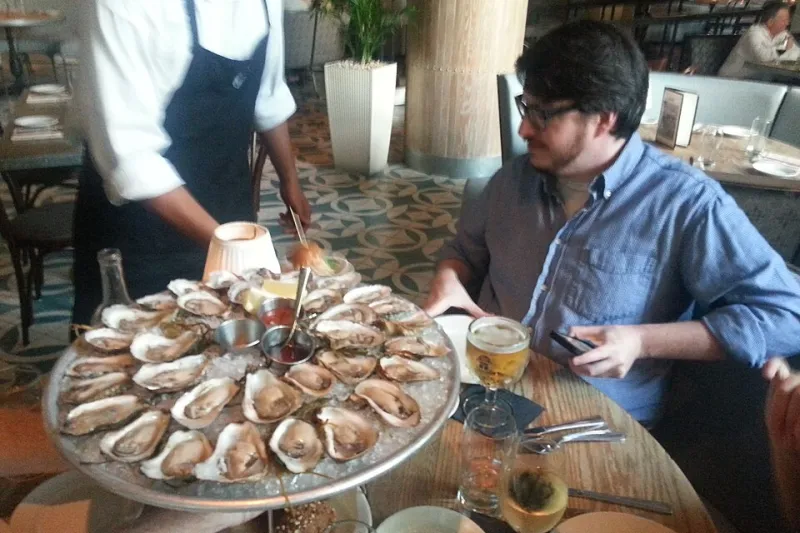
Photo: User:Youdontsmellbad, CC BY-SA 1.0, via Wikimedia Commons
There is a particular moment that many chefs describe in almost identical terms: the first time they tasted a Harris Creek oyster. The shell arrives cold, glistening, and heavy with brine. The liquor — that precious, saline nectar pooled inside — carries the unmistakable character of the Chesapeake Bay's middle reaches. And then the flavor unfolds: a clean salinity up front, a gentle sweetness in the middle, and a long, mineral finish that lingers like the memory of a coastal breeze. It is, by most accounts, an extraordinary introduction.
In the span of roughly a decade, Harris Creek oysters have traveled from the relative obscurity of local Maryland watermen's hauls to the most prestigious raw bars and tasting menus in the country. That journey — from Chesapeake tributary to national culinary darling — is one defined by ecological restoration, rigorous aquaculture, and the discerning palates of America's most celebrated chefs.
A Waterway Reborn
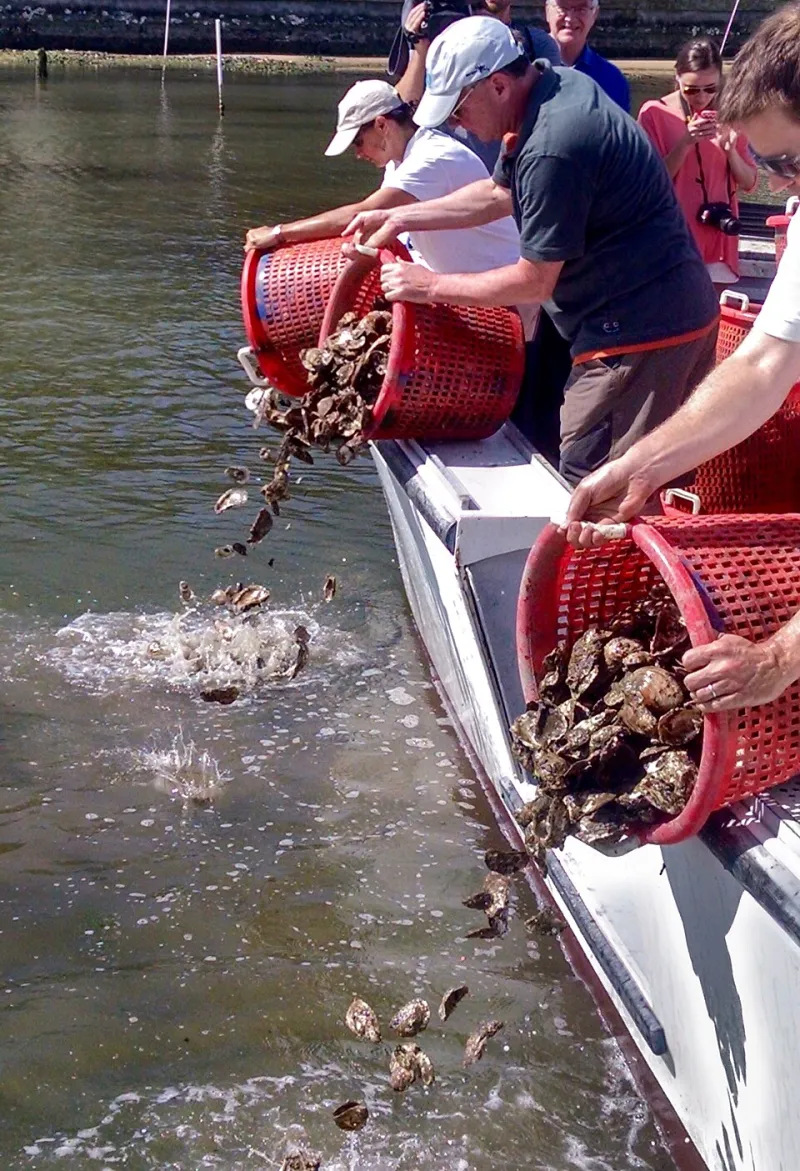
To understand the oyster's rise, one must first appreciate the improbability of its existence. Harris Creek, a tributary of the Choptank River on Maryland's Eastern Shore, was once so depleted by overharvesting and poor water quality that commercial oyster production had become nearly untenable. What followed was one of the most ambitious shellfish restoration efforts in American history — a collaboration between watermen, marine scientists, conservation organizations, and state agencies that slowly, painstakingly rebuilt both the reef structures and the ecological conditions necessary for oysters to thrive.
The results have been transformative. Water clarity in Harris Creek has improved measurably, submerged aquatic vegetation has returned to areas long barren, and oyster populations have rebounded to levels not seen in generations. This ecological renaissance did more than restore a fishery; it produced an oyster of exceptional and consistent quality — the kind that catches a chef's attention and holds it.
What Sets Harris Creek Apart
In the competitive world of premium oysters, regional identity is everything. The concept of merroir — the aquatic equivalent of wine's terroir — holds that an oyster's flavor is inseparable from the specific body of water in which it grows. By this measure, Harris Creek occupies a singular position.
The creek benefits from a careful balance of salinity, nutrient levels, and water temperature that distinguishes it from other notable oyster-producing regions. Unlike the intensely briny oysters harvested from the cold, open waters of the Pacific Northwest or the Gulf Coast's famously mild and buttery varieties, Harris Creek oysters occupy a considered middle ground. Their salinity is present but not aggressive. Their sweetness is genuine rather than cloying. Their texture — plump, firm, and yielding — speaks to the particular conditions of the Chesapeake's mid-bay tributaries.
For chefs constructing a raw bar program or a tasting menu course built around shellfish, this balance is enormously appealing. Harris Creek oysters are versatile enough to pair with a wide range of accompaniments — from a classic mignonette to a yuzu-forward granita — without being overwhelmed or losing their essential character.
The Chef's Perspective
Across the country, from the white-tablecloth dining rooms of Washington, D.C., to the celebrated seafood-forward restaurants of New York City and the emerging culinary scenes of cities like Nashville and Atlanta, chefs have made Harris Creek oysters a deliberate and prominent feature of their menus.
Many describe the decision as rooted in both flavor and narrative. In an era when diners are increasingly interested in provenance — in knowing not just what they are eating but where it came from and how it arrived at the table — Harris Creek offers a story of remarkable depth. The restoration of the fishery, the sustainable aquaculture practices employed by local growers, and the deep historical connection between the Chesapeake Bay and American foodways all contribute to a narrative that resonates with contemporary dining culture.
Chefs who have incorporated Harris Creek oysters into their programs frequently note that their guests respond not only to the taste but to the conversation the oyster invites. To serve a Harris Creek oyster is to offer a small lesson in ecology, history, and the relationship between responsible stewardship and culinary excellence.
A Pairing Philosophy Built Around the Shell
One of the more compelling aspects of Harris Creek oysters' ascent is the way they have influenced pairing conversations at the highest levels of American cuisine. Their nuanced flavor profile — that interplay of brine, sweetness, and mineral depth — rewards thoughtful beverage and condiment pairings in ways that less complex oysters simply do not.
Dry, high-acid white wines such as Muscadet or Chablis remain the classical choice, their lean minerality forming an elegant counterpoint to the oyster's natural salinity. However, chefs and sommeliers have increasingly explored less conventional pairings: bone-dry sparkling wines from Virginia and Maryland's own growing wine regions offer a regional coherence that many find deeply satisfying. Craft saisons and gose-style beers — with their gentle tartness and effervescence — have also proven remarkably compatible.
On the plate, Harris Creek oysters have inspired mignonettes built around local ingredients: apple cider vinegar from the Chesapeake region, freshly grated horseradish, and even light preparations involving cucumber water or dill oil. The oyster's inherent complexity makes it a willing partner in these creative endeavors without ever losing its own identity.
The National Moment
The recognition Harris Creek oysters now enjoy at the national level is not accidental. It is the product of decades of conservation work, the dedication of Maryland's aquaculture community, and the advocacy of chefs who recognized early that they had encountered something genuinely exceptional.
Food media has played its part as well. Features in prominent culinary publications, appearances on tasting menus reviewed by major critics, and the growing appetite for regional American food stories have all amplified awareness of what the Chesapeake's Eastern Shore is producing. Harris Creek oysters have, in short, arrived at precisely the right cultural moment — when American diners are more curious about, and more committed to, the origins of their food than at any previous point in the nation's history.
For those who have followed the creek's story from its troubled recent past to its current prominence, there is something deeply gratifying about this moment. The oyster that was nearly lost has become, improbably and magnificently, one of the most sought-after bivalves in the country. And for those fortunate enough to encounter one on a well-appointed raw bar, the first taste remains as revelatory as ever.